

A creamy, crunchy, restaurant-style coleslaw you can easily recreate in your own kitchen
Coleslaw is one of those side dishes that seems simple but is surprisingly memorable when done right. If you have ever tasted the famous peanut coleslaw served at Wood Ranch, you already know it is not your average cabbage salad. It is creamy yet light, slightly sweet yet savory, with a nutty crunch that makes it stand out from traditional slaws.
The good news is that you do not need to visit the restaurant to enjoy this flavor. With the right ingredients, balance, and technique, you can make a very similar peanut coleslaw at home. In this detailed guide, you will learn everything — from ingredient selection and preparation to flavor adjustments, storage tips, variations, and common mistakes to avoid.
This article is written in an easy, friendly style so anyone can follow along, whether you are a beginner cook or someone who simply loves experimenting with restaurant-inspired recipes.
What Makes Wood Ranch Peanut Coleslaw Special?
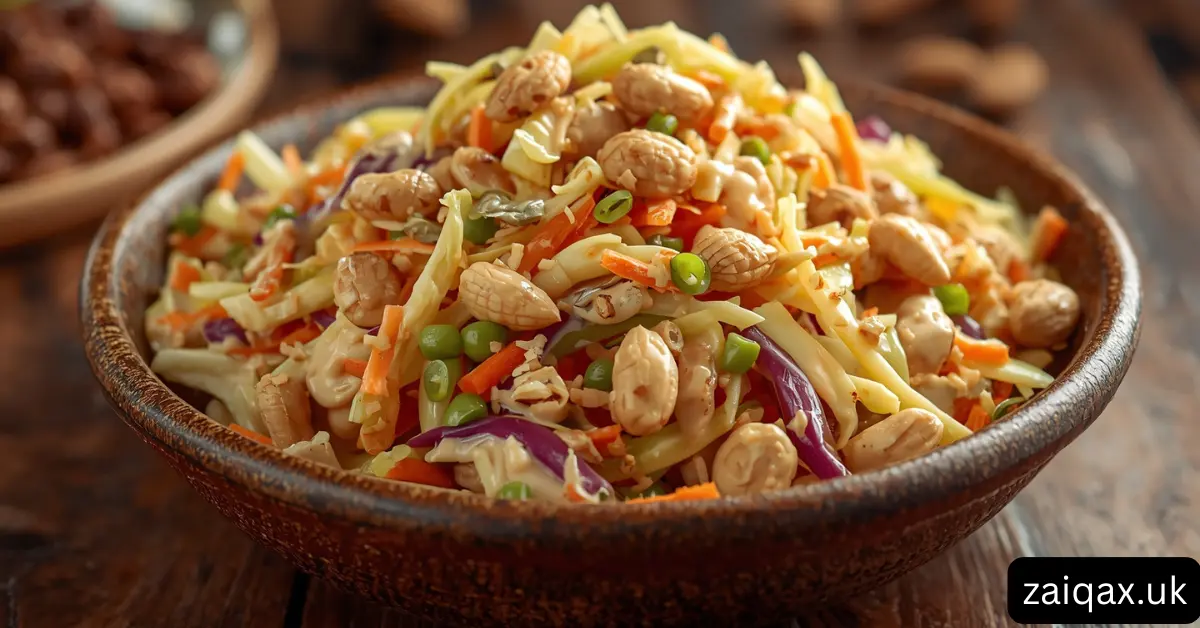
Before jumping into the recipe, it helps to understand why this coleslaw is different from classic versions.
Traditional coleslaw usually contains:
- Shredded cabbage
- Carrots
- Mayonnaise-based dressing
- Vinegar or sugar
Peanut coleslaw adds a new layer of flavor and texture:
- Roasted peanuts for crunch and nuttiness
- Creamy dressing with subtle sweetness
- Balanced acidity to keep it refreshing
- Light savory notes that pair well with grilled foods
The combination creates a slaw that feels richer and more exciting without being heavy.
Flavor Profile You Should Aim For
A good peanut coleslaw should taste:
Creamy but not greasy
Crunchy and fresh
Slightly sweet
Mildly tangy
Lightly nutty
Well-balanced
If any single element dominates — too sweet, too sour, too thick — the slaw loses its charm. Balance is the key.
Ingredients for the Best Peanut Coleslaw at Home
Let’s start with the building blocks. Quality ingredients make a big difference.
For the Coleslaw Base
- 4 cups green cabbage, finely shredded
- 1 cup red cabbage, finely shredded (optional but adds color)
- 1 cup carrots, julienned or grated
- ½ cup roasted peanuts, roughly chopped
- 2 tablespoons green onions, thinly sliced (optional)
For the Creamy Peanut Dressing
- ½ cup mayonnaise
- 2 tablespoons creamy peanut butter
- 1 tablespoon honey or sugar
- 1 tablespoon apple cider vinegar or rice vinegar
- 1 teaspoon soy sauce (adds depth)
- ½ teaspoon salt
- ¼ teaspoon black pepper
- 1–2 tablespoons milk or water (to thin if needed)
Choosing the Right Cabbage
Many people overlook this step, but cabbage texture is critical.
Green Cabbage
- Mild flavor
- Crisp texture
- Ideal for creamy slaws
Red Cabbage
- Slightly peppery
- Adds vibrant color
- Can be firmer, so slice thin
For the most restaurant-like result, shred the cabbage finely. Thick slices make the slaw bulky and harder to coat with dressing.
Preparing the Vegetables Properly
A good coleslaw is all about texture.
How to Shred Cabbage
- Remove outer leaves
- Cut cabbage into quarters
- Remove the core
- Slice thin using a sharp knife or mandoline
Carrots
- Grated carrots blend smoothly
- Julienned carrots add crunch
Both work, so choose based on your preference.
Why Roasted Peanuts Work Best
Peanuts are the star ingredient. Always use:
Dry roasted peanuts
Unsalted or lightly salted
Fresh and crunchy
Avoid soft or stale peanuts — they ruin the texture. Chop them roughly so you get noticeable bites.
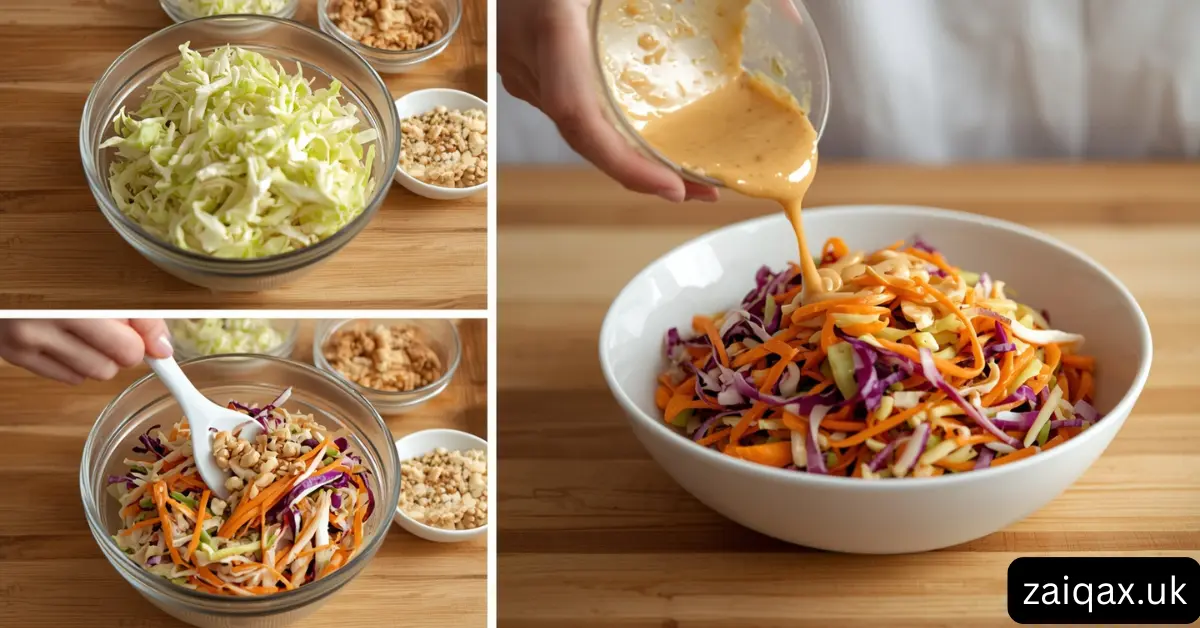
Now let’s put everything together.
Step 1: Prepare the Vegetables
Place shredded green cabbage, red cabbage, and carrots in a large mixing bowl.
Step 2: Make the Dressing
In a separate bowl, whisk together:
- Mayonnaise
- Peanut butter
- Honey or sugar
- Vinegar
- Soy sauce
- Salt and pepper
Mix until smooth and creamy.
If the dressing is too thick, add a little milk or water.
Step 3: Combine
Pour dressing over the vegetables. Toss gently until everything is evenly coated.
Step 4: Add Peanuts
Fold in chopped peanuts last. This keeps them crunchy.
Step 5: Chill
Refrigerate for at least 20–30 minutes. Chilling helps flavors blend.
Texture Tips for Perfect Coleslaw
If you want a truly restaurant-style result:
Do not overdress — start with less dressing
Toss gently to avoid crushing cabbage
Add peanuts just before serving if storing
Coleslaw should feel light and crisp, not soggy.
Balancing the Flavor
Taste your slaw after mixing.
Too Sweet? Add a splash of vinegar
Too Tangy? Add a little honey or sugar
Too Thick? Thin with milk or water
Too Bland? Add salt or soy sauce
Small adjustments make a big difference.
Why Soy Sauce Improves the Dressing
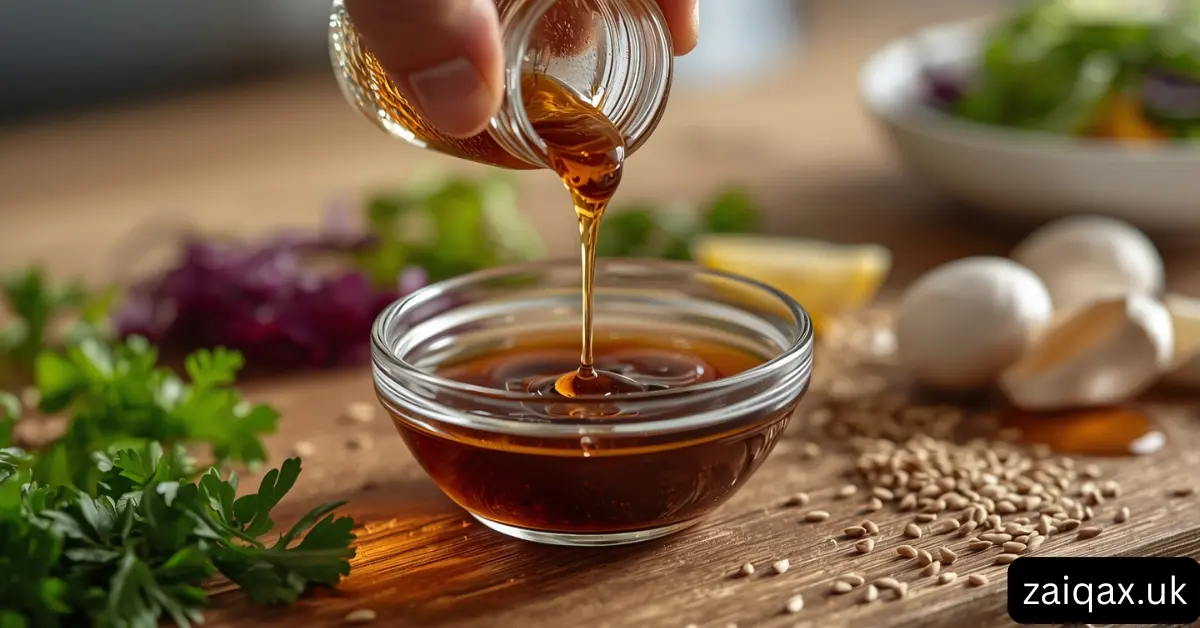
Many people skip soy sauce, but it adds:
- Subtle umami
- Depth of flavor
- Slight savory contrast
The result tastes more complex and less flat.
Serving Ideas
Peanut coleslaw pairs beautifully with many dishes.
BBQ chicken
Grilled meats
Burgers
Sandwiches
Tacos
Wraps
It works both as a side dish and topping.
Making Coleslaw Ahead of Time
Yes, you can prepare it early.
Best Practice:
- Mix vegetables + dressing
- Store peanuts separately
- Add peanuts before serving
This prevents softness.
Storage and Shelf Life
Proper storage keeps your slaw fresh.
- Refrigerate in airtight container
- Best consumed within 24–48 hours
- Stir before serving
Coleslaw naturally releases moisture over time.
Healthy Modifications
Want a lighter version?
Swap Mayonnaise
- Greek yogurt (half replacement)
- Light mayo
Reduce Sugar
- Use less honey
- Add grated apple for natural sweetness
Peanut Coleslaw Variations
You can customize it easily.
Spicy Version
Add chili flakes or sriracha.
Asian-Inspired
Add sesame oil + cilantro.
Extra Crunch
Include bell peppers or radish.
Sweet & Fruity
Add pineapple or mango bits.
Common Mistakes to Avoid
Even simple laws can go wrong.
Too much dressing
Thick cabbage slices
Stale peanuts
Not seasoning enough
Skipping chilling time
Each mistake affects texture and taste.
How to Fix Watery Coleslaw
If your slaw turns watery:
Drain excess liquid
Add fresh cabbage
Stir gently
Watery slaw usually comes from over-salting or long storage.
Why Chilling Matters
Resting time allows:
- Dressing absorption
- Flavor blending
- Better texture
Even 20 minutes improves the result.
Restaurant-Style Presentation Tips
For a visually appealing slaw:
Use a mix of green and red cabbage
Garnish with whole peanuts
Serve chilled
Use a white bowl for contrast
Presentation enhances the eating experience.
Can You Use Pre-Shredded Mix?
Yes, for convenience.
However:
- Freshly shredded cabbage tastes better
- Bagged mixes can be dry or uneven
If using packaged mix, check freshness.
Understanding Dressing Consistency
Good dressing should be:
Smooth
Creamy
Pourable
Not thick like paste
Proper thickness ensures even coating.
Best Occasions for Peanut Coleslaw
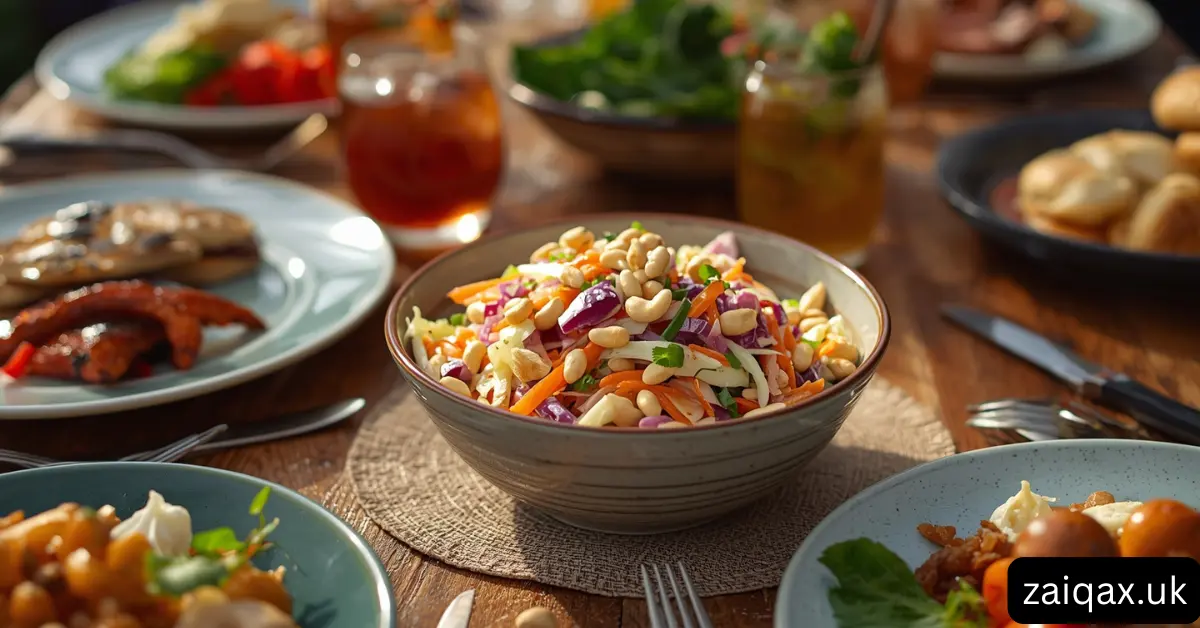
This slaw fits many settings.
Family dinners
BBQ parties
Potlucks
Lunch sides
Picnic meals
Its flavor appeals to a wide range of tastes.
Final Thoughts
Recreating the beloved peanut coleslaw from Wood Ranch at home is easier than it seems. The magic lies not in complicated cooking but in balance, freshness, and texture. With crisp cabbage, a smooth peanut dressing, and crunchy roasted peanuts, you can enjoy a restaurant-quality side dish anytime.
Once you master the base recipe, feel free to experiment with variations that match your taste. Cooking at home gives you full control — sweeter, tangier, lighter, or spicier — exactly how you like it.
Enjoy your homemade peanut coleslaw!
FAQS
What makes the Wood Ranch peanut coleslaw unique?
The creamy dressing combined with crunchy peanuts creates a sweet, savory, and nutty flavor.
Can I substitute peanuts in the recipe?
Yes, you can use cashews or almonds for a similar crunch and taste.
Is the coleslaw served at Wood Ranch healthy?
It’s relatively light but contains sugar and mayo, so moderation is key.
How long does peanut coleslaw stay fresh?
It typically stays fresh for 2–3 days when refrigerated in an airtight container.
What dishes pair well with Wood Ranch coleslaw?
It pairs perfectly with BBQ meats, grilled chicken, and sandwiches from Wood Ranch Wood Ranch.