
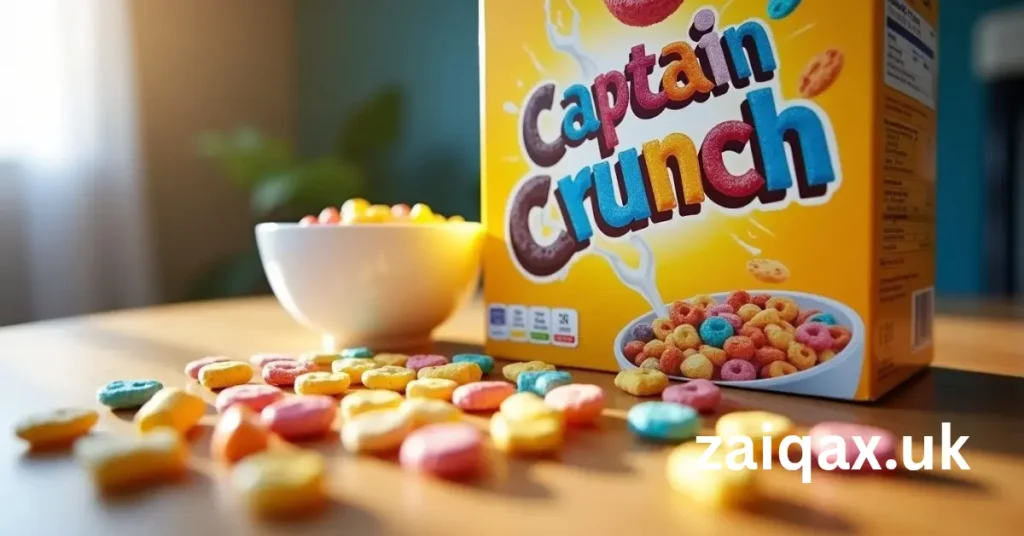
YHave you ever wondered about the meaning of the Captain Crunch food label?
You’re not alone. Thiel Crunch cereal’s delicious crunchy sweets are not relatable for most.
In this breakdown, we’ll go through each part of the Captain Crunch food label step-by-step.
I will talk about the ingredients, the added sugars, the nutrition/health claims, the marketing of the label, and any potentially harmful additives.
By the end, you will have enough information to assess the cereal’s claim and its effect on your health.
The Story Behind Captain Crunch
Before we dive into the label, let’s look at where it all started.
Captain Crunch, also known as Cap’n Crunch, was introduced in 1963 by Quaker Oats.
The cereal became famous for its golden, square-shaped pieces and sweet flavor.
It was marketed with the cartoon character Cap’n Horatio Magellan Crunch, a cheerful sea captain who promised “crunch that stays crunchy.”
Over time, the brand expanded to include different flavors like:
-
- Crunch Berries
- Peanut Butter Crunch
- Chocolatey Crunch
- Oops! All Berries
But no matter the flavor, the basic ingredients and nutrition remain quite similar.
That’s why checking the Captain Crunch food label is so important for understanding what you’re eating.
The Purpose of a Food Label
A food label is not just a box design—it’s a tool for consumers.
The Captain Crunch food label tells you everything from calories to vitamins.
It helps you make informed decisions about your diet.
The U.S. Food and Drug Administration (FDA) requires cereal companies to list:
-
- Serving size
- Calories
- Nutrients (fats, proteins, carbs)
- Ingredients
- Added sugars
- Vitamins and minerals
By reading these details carefully, you can understand how Captain Crunch fits into your daily nutrition.
The Ingredient List Explained
Let’s start by decoding the ingredient list from the Captain Crunch food label.
Typical ingredients include:
-
- Corn flour
- Sugar
- Oat flour
- Brown sugar
- Palm oil or coconut oil
- Salt
- Color additives (like Yellow 5 and Yellow 6)
- B vitamins and iron
Each of these plays a role in taste, texture, or preservation.
But some may not be as healthy as they sound.
Let’s go ingredient by ingredient.
Corn Flour
Corn flour is the base of the cereal.
It gives Captain Crunch its crispy texture.
However, it’s a refined grain, meaning much of the fiber is removed.
Refined grains digest quickly and can raise your blood sugar fast.
Sugar
Sugar gives Captain Crunch its sweet flavor—but there’s a lot of it.
In fact, sugar is the second ingredient, which means it’s used heavily.
Each serving (around 1 cup) contains 12 grams of sugar.
That’s about 3 teaspoons per bowl.
Too much sugar can lead to:
-
- Weight gain
- Tooth decay
- Fatigue
- Increased risk of diabetes
This is one of the biggest things you’ll notice when reading what’s really inside the Captain Crunch food label.
Oat Flour
Oat flour adds some nutritional value.
It has fiber and helps with texture.
But in small amounts, it doesn’t balance out the sugar content.
Brown Sugar
Brown sugar sounds healthier but it’s basically white sugar with molasses.
It doesn’t offer any significant health benefits compared to regular sugar.
Palm Oil and Coconut Oil
These oils add crunch and prevent sogginess.
They also add saturated fat, which in high amounts may raise cholesterol.
However, small amounts of these oils are common in cereals.
The issue arises when they combine with high sugar.
Salt
Salt enhances flavor but adds sodium.
A serving of Captain Crunch contains about 200mg of sodium, which is moderate.
Still, it’s worth watching if you eat salty foods throughout the day.
Artificial Colors
The yellow color of Captain Crunch comes from Yellow 5 and Yellow 6.
These are artificial food dyes.
While approved by the FDA, some studies suggest they may cause sensitivity in children.
Reading the Captain Crunch food label helps parents avoid potential irritants if their kids are sensitive to dyes.
Vitamins and Minerals
To make the cereal appear healthier, it’s fortified with vitamins and minerals such as:
-
- Niacinamide (Vitamin B3)
- Iron
- Thiamin (Vitamin B1)
- Riboflavin (Vitamin B2)
- Folic acid
These nutrients are beneficial, but they are added back after processing removes natural nutrients.
So while the box says “fortified,” it doesn’t mean it’s a whole-grain, nutrient-dense cereal.
Nutritional Breakdown of Captain Crunch
Let’s look at the nutrition facts from the Captain Crunch food label.
Below is an approximate breakdown per 1-cup serving (27g):
| Nutrient | Amount |
| Calories | 150 |
| Total Fat | 2g |
| Saturated Fat | 1g |
| Trans Fat | 0g |
| Cholesterol | 0mg |
| Sodium | 200mg |
| Total Carbohydrates | 31g |
| Dietary Fiber | <1g |
| Sugars | 12g |
| Protein | 1g |
| Iron | 50% DV |
| Vitamin B6 | 25% DV |
| Folic Acid | 50% DV |
This shows that the cereal is high in sugar and carbs but low in protein and fiber.
It’s not a balanced breakfast by itself.
Sugar and the Hidden Impact
When we talk about what’s really inside the Captain Crunch food label, sugar is the main concern.
Experts recommend that adults limit added sugars to:
-
- 25 grams per day for women
- 36 grams per day for men
A single bowl of Captain Crunch can give you nearly half that amount.
Children often exceed their daily sugar limit after just one serving.
High sugar intake can lead to:
-
- Energy crashes
- Cravings
- Poor concentration
- Risk of obesity and diabetes
If you love Captain Crunch, you can balance it by reducing sugar elsewhere in your day.
Fiber—The Missing Nutrient
Fiber is essential for digestion and fullness.
Unfortunately, Captain Crunch provides less than 1 gram per serving.
That’s far below what your body needs.
For comparison:
-
- Oatmeal has about 4g per serving.
- Whole grain cereals have 5–7g.
This low fiber content is one reason why you may feel hungry again soon after eating Captain Crunch.
Artificial Colors and Additives
The Captain Crunch food label lists several color additives.
These include Yellow 5, Yellow 6, and sometimes Red 40 in berry versions.
While safe in moderation, studies suggest possible side effects like:
-
- Hyperactivity in children
- Allergic reactions in sensitive individuals
Parents concerned about dyes often choose natural cereals with colors from fruits or vegetables instead.
Marketing Tricks on the Box
The box design and language can be misleading.
Words like “fortified,” “crunchy,” or “fun” distract from the sugar and additives.
The cartoon mascot Cap’n Crunch targets kids, encouraging them to pick it from the shelf.
This is part of food marketing psychology—brands make products appear healthier or more exciting than they are.
That’s why learning what’s really inside the Captain Crunch food label helps you make smarter choices.
Comparing Captain Crunch With Other Cereals
To understand its value, let’s compare it with other popular cereals.
| Cereal | Sugar (per cup) | Fiber | Protein |
| Captain Crunch | 12g | <1g | 1g |
| Cheerios | 1g | 3g | 3g |
| Frosted Flakes | 13g | 1g | 2g |
| Special K | 4g | 1g | 2g |
| Honey Nut Cheerios | 12g | 2g | 3g |
This table shows that Captain Crunch is closer to a dessert cereal than a health cereal.
Is Captain Crunch Gluten-Free?
Although it contains corn and oat flour, Captain Crunch is not labeled gluten-free.
That’s because the oats may be contaminated with gluten during processing.
People with celiac disease or gluten intolerance should avoid it or look for certified gluten-free alternatives.
How to Read the Captain Crunch Food Label Like a Pro
Here’s how you can quickly analyze the label:
-
- Check the first three ingredients — they make up most of the product.
- Look for added sugars — anything with “syrup” or “ose” is sugar.
- Watch sodium and fat levels — choose cereals under 200mg sodium and under 2g fat.
- Check for fiber — aim for at least 3g per serving.
- Avoid artificial colors and additives when possible.
This simple approach can help you make better breakfast choices every time.
Healthier Ways to Enjoy Captain Crunch
You don’t have to give it up completely.
Here are ways to make it part of a balanced diet:
-
- Mix with high-fiber cereal like bran flakes.
- Add sliced fruit for natural sweetness.
- Use smaller portions—half a cup instead of a full one.
- Pair with unsweetened milk or yogurt.
- Save it as an occasional treat, not a daily breakfast.
Healthier Alternatives to Captain Crunch
If you love the crunch but want less sugar, try these options:
-
- Kashi Go Lean Crunch – high in protein and fiber.
- Nature’s Path Organic Heritage Flakes – made with whole grains.
- Barbara’s Puffins Original – crunchy with less sugar.
- Cheerios – simple ingredients and low sugar.
These cereals can give you the same morning satisfaction without the sugar spike.
14. The Psychology of Sweet Cereal Addiction
There’s a reason you can’t stop at one bowl.
The sugar and crunch create a dopamine response in your brain, similar to how junk food works.
That’s why it’s easy to overeat Captain Crunch.
Understanding this helps you control portions and enjoy it mindfully.
What Parents Should Know
Children are the main target for sugary cereals.
The bright boxes, fun shapes, and sweet taste make them irresistible.
But too much sugar can affect children’s:
-
- Focus
- Dental health
- Weight
- Energy levels
Parents should always check what’s really inside the Captain Crunch food label before serving it to kids.
Pairing it with protein-rich foods like eggs or milk can balance the meal.
16. The Environmental Impact of Ingredients
Palm oil, found in Captain Crunch, is controversial.
It contributes to deforestation and wildlife habitat loss.
Some brands are moving to sustainable palm oil, but it’s not always clear on the label.
Choosing cereals with eco-friendly ingredients can make a small but positive impact.
17. The Hidden Calories in Toppings
Many people add extra sugar, honey, or flavored milk to their cereal.
That can double the calories and sugar content.
A “light” bowl of cereal can easily turn into a dessert.
Stick with plain milk or unsweetened plant-based milk to keep calories in check.
What’s Really Inside the Captain Crunch Food Label — Summary
Here’s a recap of what we’ve discovered:
-
- High in sugar and refined grains
- Low in fiber and protein
- Contains artificial colors and palm oil
- Fortified with vitamins, but not naturally nutritious
- Fun to eat but not ideal as a daily breakfast
Understanding the label helps you enjoy it responsibly.
Expert Opinion
Nutritionists often classify Captain Crunch as a “treat cereal.”
It’s fine in moderation but should not replace nutrient-rich breakfasts.
Whole-grain, high-protein, low-sugar cereals are better for daily energy and health.
Final Thoughts
So, what’s inside the Captain Crunch food label?
A delicious crunch brings back fond memories, but a heavy dose of sugar.It’s not and shouldn’t be your breakfast.Refined grains, added sugars, and synthetic colors.
“The more you know” is not just cliché.
The remaining sugars are, Enjoy Captain Crunch, but your breakfast shouldn’t.
That’s the secret. All the ingredients are natural.