
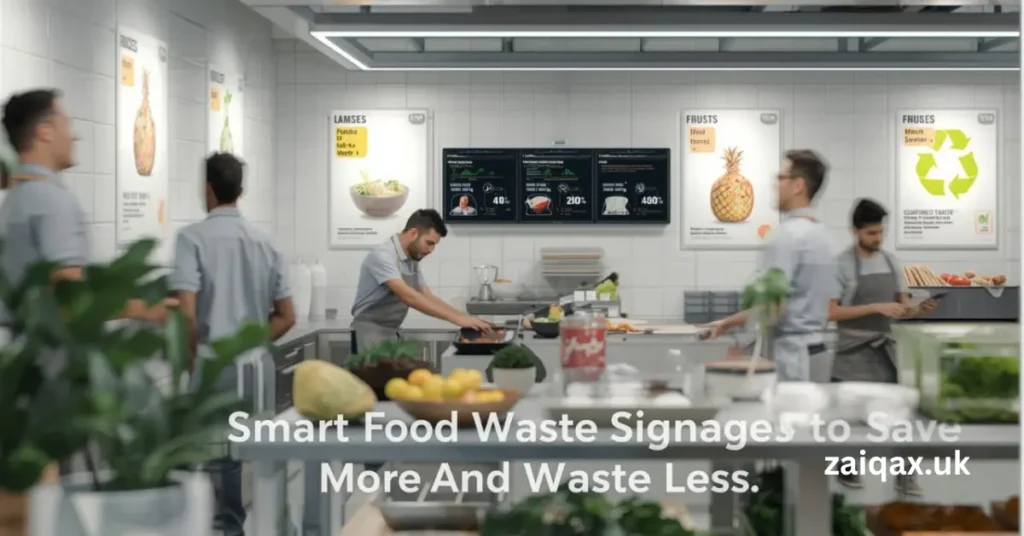
Food waste is a huge problem today. Restaurants, hotels, and cafés throw away thousands of pounds of food every year. Homes also waste a lot of food because they forget expiry dates or store food wrong. This waste harms the environment and costs a lot of money. That is why many businesses are now using Smart Food Waste Signage To Save More and Waste Less.
Smart signage helps workers and customers make better choices. It also spreads awareness about food waste. This guide will show how smart signage works, why it matters, and how it helps people waste less and save more.
What Is Smart Food Waste Signage?
Smart food waste signage is clear labeling, messages, or digital displays placed in kitchens or food areas. They tell staff how to manage food properly. They also remind customers to take what they can eat.
These signs guide people to reduce waste in a simple way. Smart signs can be:
-
- Wall posters
- Food labels
- Shelf markers
- Tray reminders
- Digital screens
- QR code stickers
The main purpose is to stop waste before it happens.
By using Smart Food Waste Signage To Save More and Waste Less, food businesses become more responsible and cost-efficient.
Why Food Waste Matters
Food waste affects:
The Environment
When food goes to landfill, it creates methane gas. This gas is harmful to the planet.
The Economy
Food waste means money waste. Businesses throw away profits every day.
Society
While some waste food, many people have no food.
Smart signage helps solve all three problems.
Benefits of Using Smart Food Waste Signage To Save More and Waste Less
Here are the major advantages:
| Benefit | How It Helps |
| Saves Money | Less food thrown away reduces buying costs |
| Better Awareness | Staff and customers learn more |
| Improved Storage | Correct labeling prevents spoilage |
| Higher Food Quality | Food is used fresh and at the right time |
| Faster Kitchen Operations | Workers find items easily |
| Strong Sustainability Image | Customers trust eco-friendly values |
Where to Use Smart Food Waste Signage
Different areas need different signage types:
Kitchen Storage Rooms
Labels for:
-
- Expiry dates
- Opened-date stickers
- Use-first zone markers
- Temperature reminders
Buffets & Dining Areas
Signs guiding:
-
- Take small portions first
- Come back for more if needed
- Don’t fill your plate too much
Food Preparation Stations
Guides for:
-
- Portion control
- Correct cutting and trimming
- Ingredient rotation (“First In, First Out”)
Waste Bins
Sorting instructions:
-
- Food bin
- Recycling
- Compost
- Cooking oil bin
When workers and guests follow signs, waste falls quickly.
Types of Smart Food Waste Signage To Save More and Waste Less
You can choose signage based on your needs:
1️ Instructional Signage
Explains how to store, label, or handle food.
Example:
“Use Meat Within 3 Days of Opening”
2️ Portion Control Signage
Helps reduce oversized servings.
Example:
“Smaller Ladle = No Waste”
3️ Awareness Motivational Signage
Encourages behavior change.
Example:
“Food Waste = Money Waste”
4️ Color-Coded Labels
Helps staff quickly identify safe items.
| Color | Meaning |
| Green | Fresh / Safe |
| Yellow | Use Soon |
| Red | Expiring Today |
5️ Digital Smart Displays
Screens showing:
-
- Inventory levels
- Shelf life
- Food waste data
These use sensors or software to track waste in real time.
6️ QR Code Smart Food Labels
Scan code to check:
-
- Expiry dates
- Manufacturer details
- Recipe ideas
This makes food management smarter.
Simple Examples of Smart Food Waste Signage To Save More and Waste Less
Here are easy messages that work well:
Take what you can finish
Use first: About to expire
Only cook what you need
Check dates before discarding
Think before you toss
These short reminders change habits without pressure.
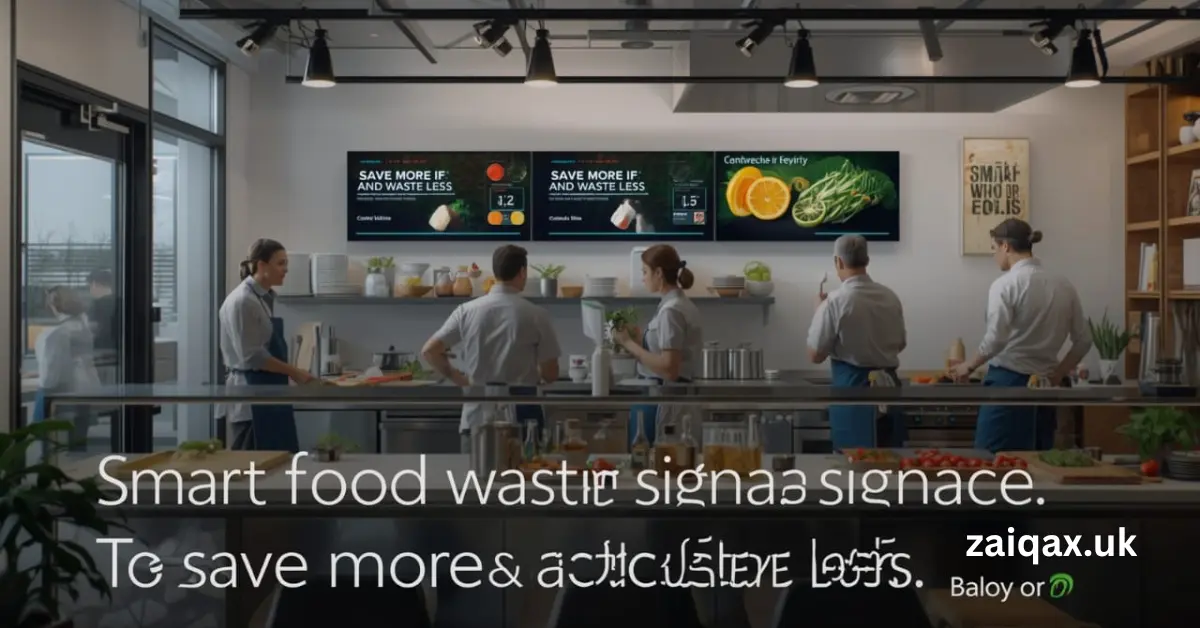
How to Create Effective Smart Food Waste Signage
If your signage is clear and simple, more people follow it. Here are tips:
Use large fonts
Use images or icons
Use bright colors for alerts
Keep the message short
Place signs where they are needed
Update regularly
Good signs make food handling easier.
How to Train Staff to Follow Smart Food Waste Signage
Training gives even better results. A quick plan:
-
- Explain why food waste is harmful
- Show what each sign means
- Teach proper storage methods
- Monitor performance
- Reward good behavior
Regular refreshers keep everyone aware.
Smart Food Waste Signage for Customers
Customers waste food too. Signs should be friendly, not negative.
Examples:
“Love Food? Don’t Waste It”
“Start Small and Come Back for More”
“Your Plate Can Save the Planet”
Positive messages work better than warnings.
Improving Profitability with Smart Food Waste Signage
Food waste costs restaurants thousands of dollars each year. Smart signage directly boosts profit:
| Impact | Result |
| Less spoiled stock | Lower purchasing cost |
| Better menu planning | Only serve what sells |
| Less leftovers | Less waste disposal cost |
| Better staff control | Fewer mistakes |
Digital Tools That Support Smart Food Waste Signage
You can also use:
-
- Inventory tracking apps
- Smart shelf sensors
- Expiry tracking software
- AI cameras for waste bins
- Menu prediction tools
These tools pair with signage to build a zero-waste future.
Smart Food Waste Signage for Homes
Homes also waste food often. Smart signage helps families too.
Examples for kitchens:
-
- Sticky notes on the fridge
- Weekly meal plan chart
- Leftovers reminder label
- Freezer item tracking list
Kids learn to respect food when they see reminders daily.
Step-by-Step Plan to Start Using Smart Food Waste Signage
Here is a simple system:
Step 1 – Identify major waste issues
Expired food? Plate waste? Cooking mistakes?
Step 2 – Select signage type for each problem
Choose a mix of posters, labels, and digital tools.
Step 3 – Place signs correctly
Put them where decisions are made.
Step 4 – Train everyone
Explain the purpose clearly.
Step 5 – Track progress
Measure savings every week.
Step 6 – Improve signage over time
Update messages as habits change.
Case Study: Café Using Smart Food Waste Signage To Save More and Waste Less
A small café had issues with expired items and plate waste. They took action:
Labelled chilled food with “Use First” stickers
Added customer signage at the serving counter
Implemented portion size guides
Result after 2 months:
-
- Food waste dropped by 30%
- Profit increased by 12%
- Customer satisfaction improved
Small changes made a big difference.
Customer Engagement Ideas
Encourage customers to support the effort:
-
- Give discounts for finishing their plate
- Offer smaller plate options
- Provide takeaway boxes
- Promote “Zero Waste Day”
- Display weekly waste reduction results
When customers feel included, they cooperate more.
Frequently Asked Questions (FAQ)
What is the main goal of Smart Food Waste Signage?
To reduce food waste by guiding smarter choices.
Who should use smart signage?
Restaurants, hotels, schools, hospitals, homes—everyone who handles food.
Is signage expensive?
No. Many signs are low-cost and save more money than they cost.
How long before signage shows results?
Most businesses see change within a few weeks.
Does smart signage really save money?
Yes. Less waste means more profit.
Future of Smart Food Waste Signage
Technology will make signage smarter:
-
- AI-based waste tracking
- Dynamic pricing for expiring food
- Smart labels that change color automatically
- Augmented reality food info
These innovations will help even more people waste less.
Conclusion
Smart Food Waste Signage To Save More and Waste Less is a powerful tool to fight food waste. It makes handling food easier and more responsible. It also saves more money and protects the planet.
Food waste does not have to be normal. With simple signs and clear reminders, everyone can help. Kitchens become smarter. Customers feel proud to make a difference. Together, we can build a future where food is valued, not wasted.
Final Message
Start using Smart Food Waste Signage To Save More and Waste Less today.
Every smart decision counts.
Every saved meal matters.
Every person’s effort leads to a better world.