
A food cutting board is one of the most used tools in any kitchen. From chopping vegetables to slicing meat and bread, it faces daily wear and tear. Yet many people ignore one simple step that professionals never skip—properly oiling their cutting board. Using mineral oil for food cutting board care is the safest, easiest, and most effective way to protect your board, extend its life, and keep food preparation hygienic.
This complete guide explains why mineral oil matters, how to apply it correctly, how often to use it, and the simple professional method that keeps cutting boards smooth, strong, and bacteria‑resistant. Whether you use a wooden cutting board, bamboo board, or butcher block, this article will help you master the process with confidence.
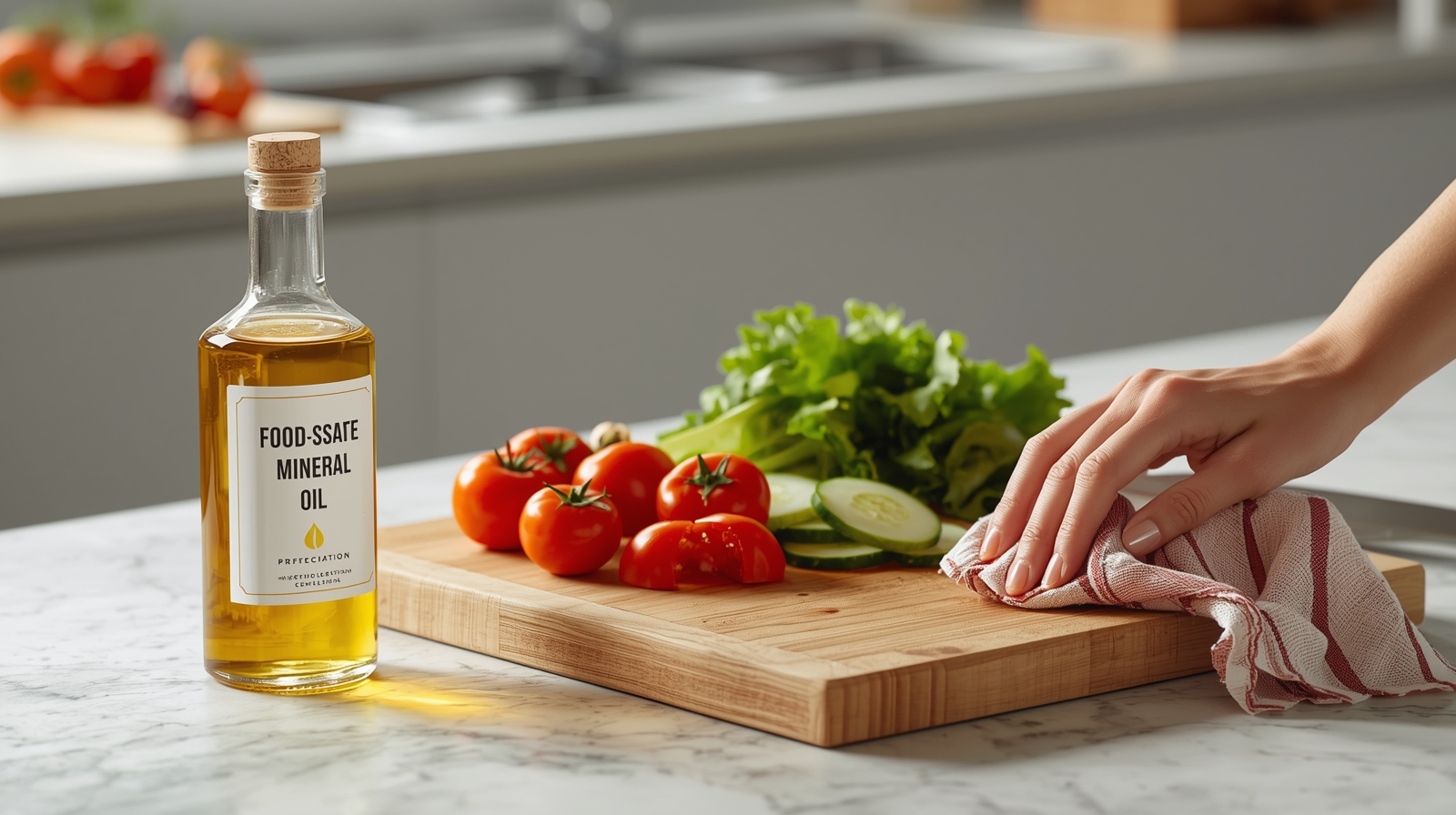
What Is Mineral Oil and Why Is It Used on Cutting Boards
Mineral oil is a clear, odorless, tasteless oil derived from petroleum. When labeled food‑grade or USP mineral oil, it is completely safe for food contact. It does not spoil, turn rancid, or react with food, making it ideal for kitchen tools.
For cutting boards, mineral oil acts as a protective barrier. Wood is naturally porous. Without protection, it absorbs moisture, food juices, and bacteria. Mineral oil fills those pores, reducing water absorption and preventing cracks and warping.
Key Reasons Professionals Choose Mineral Oil
- It is food‑safe and non‑toxic
- It does not harden or become sticky
- It never goes rancid
- It penetrates deep into wood fibers
- It enhances the natural grain and color of wood
Professional chefs, butchers, and woodworkers rely on mineral oil because it delivers consistent, long‑term protection without altering the taste or safety of food.
Why Cutting Boards Need Regular Oiling
A cutting board faces constant stress. Knives create micro‑cuts, water causes swelling, and heat speeds up drying. Over time, untreated boards become rough, dull, and cracked.
Regular oiling solves these problems by:
- Preventing moisture damage
- Reducing cracking and splitting
- Making the surface smoother for cutting
- Improving hygiene by sealing pores
- Extending the lifespan of the board
Without oil, even the best wooden cutting board can fail prematurely.
Types of Cutting Boards That Benefit Most from Mineral Oil
Wooden Cutting Boards
Hardwoods like maple, walnut, beech, teak, and acacia benefit the most from mineral oil. These woods are durable but still porous and require sealing.
Bamboo Cutting Boards
Bamboo is technically a grass, but it behaves like wood. It is highly absorbent and can dry out quickly. Mineral oil keeps bamboo boards flexible and smooth.
Butcher Blocks
Large butcher blocks face heavy use and frequent washing. Mineral oil prevents surface cracking and deep moisture penetration.
Boards That Do Not Need Mineral Oil
- Plastic cutting boards
- Glass cutting boards
- Marble or stone boards
Mineral oil is designed for natural fiber surfaces, not synthetic materials.
Food‑Grade Mineral Oil vs Regular Mineral Oil
Not all mineral oil is suitable for kitchen use. Always choose food‑grade mineral oil.
Food‑Grade Mineral Oil
- Labeled USP or food safe
- Approved for food contact
- Safe for cutting boards and utensils
Non‑Food‑Grade Mineral Oil
- May contain additives
- Not intended for ingestion
- Should never be used on food surfaces
Reading labels carefully ensures safety for you and your family.
The Simple Method Pros Never Skip
Professional kitchens follow a straightforward, repeatable method for oiling cutting boards. It takes little time but delivers long‑lasting results.
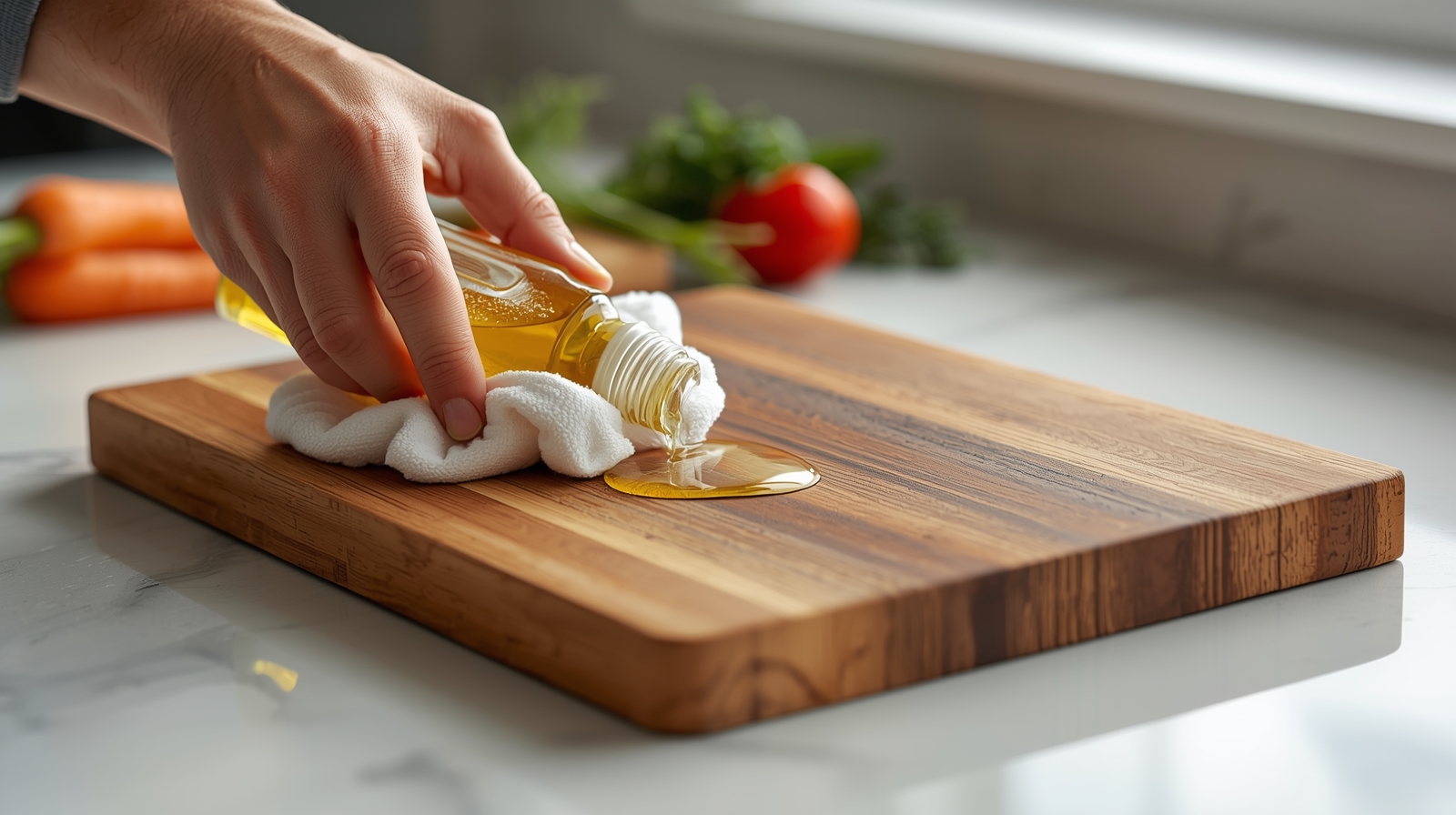
Step 1 Clean the Cutting Board Thoroughly
Wash the board with warm water and mild dish soap. Scrub gently to remove food particles and residue. Avoid soaking the board in water.
Rinse quickly and dry with a clean towel.
Step 2 Allow the Board to Fully Dry
Let the board air dry completely. This step is critical. Applying oil to a damp board traps moisture inside the wood.
Drying may take several hours or overnight.
Step 3 Apply Mineral Oil Generously
Pour a small amount of mineral oil onto the board. Use a clean cloth or paper towel to spread it evenly across the surface.
Rub with the grain and cover:
- Top surface
- Bottom surface
- All edges and corners
Professionals never skip the edges, as they absorb moisture fastest.
Step 4 Let the Oil Soak In
Allow the oil to absorb for at least 30 minutes. For dry boards, leave it overnight.
The wood will drink in what it needs.
Step 5 Wipe Off Excess Oil
After soaking, wipe away any remaining oil with a clean cloth. The board should feel smooth, not greasy.
Step 6 Optional Second Coat
For new or very dry boards, apply a second coat using the same method.
How Often Should You Oil a Cutting Board
Frequency depends on usage and environment.
General Guidelines
- New boards: once a week for the first month
- Regular home use: once every 3 to 4 weeks
- Heavy use: once every 1 to 2 weeks
- Dry climates: oil more frequently
A simple test is the water drop test. Sprinkle a few drops of water on the board. If water beads up, the board is protected. If it absorbs quickly, it needs oil.
Benefits of Using Mineral Oil for Food Cutting Board Care
Extends Board Life
Mineral oil prevents cracks and warping, allowing boards to last for years.
Improves Food Safety
Sealed pores reduce bacteria growth and prevent odors from settling into the wood.
Enhances Appearance
Oiled boards look richer and smoother, highlighting natural wood grain.
Easy Maintenance
The process is quick, affordable, and requires no special tools.
Common Mistakes to Avoid
Even simple care can go wrong if mistakes are made.
Using Cooking Oils
Oils like olive, vegetable, or coconut oil go rancid over time. This leads to sticky surfaces and unpleasant smells.
Skipping the Bottom Side
Oiling only one side causes uneven moisture balance, leading to warping.
Over‑Soaking in Water
Water damages wood fibers. Always wash quickly and dry immediately.
Applying Oil Too Sparingly
A dry board needs generous oiling. Light coating may not penetrate deeply.
Mineral Oil and Beeswax Combination
Many professionals enhance mineral oil with beeswax.
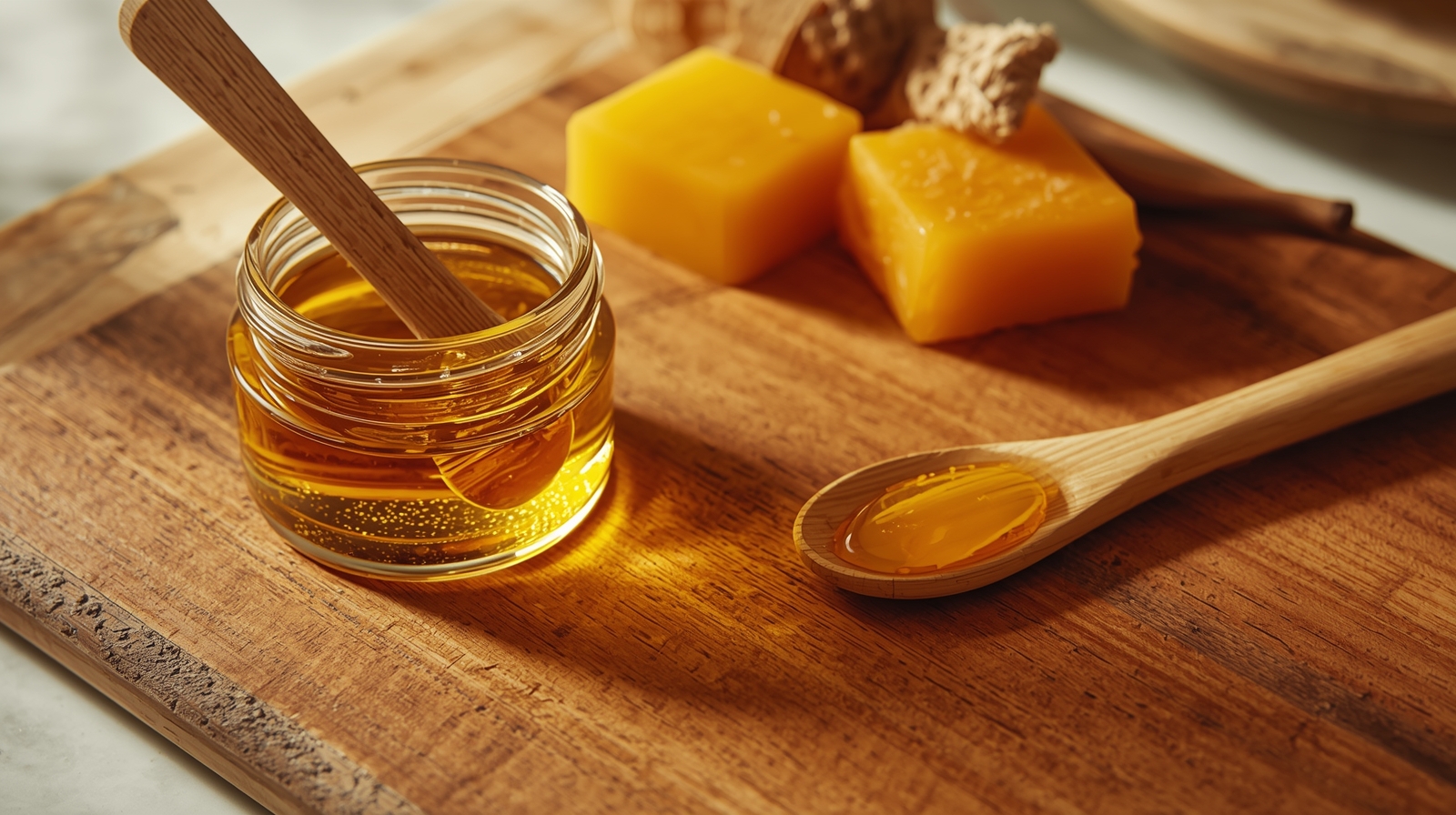
Why Add Beeswax
- Adds a moisture‑resistant top layer
- Provides a smooth, polished finish
- Improves water repellency
How It Works
Mineral oil penetrates the wood, while beeswax seals the surface. This combination is especially effective for butcher blocks.
You can use mineral oil alone or a mineral oil and beeswax blend depending on your needs.
Is Mineral Oil Safe for Food Preparation
Yes, food‑grade mineral oil is safe. It is commonly used in food processing, pharmaceuticals, and kitchen tools.
It has no taste, no smell, and does not react with food ingredients.
How to Restore an Old or Dry Cutting Board
An old board can often be revived with mineral oil.
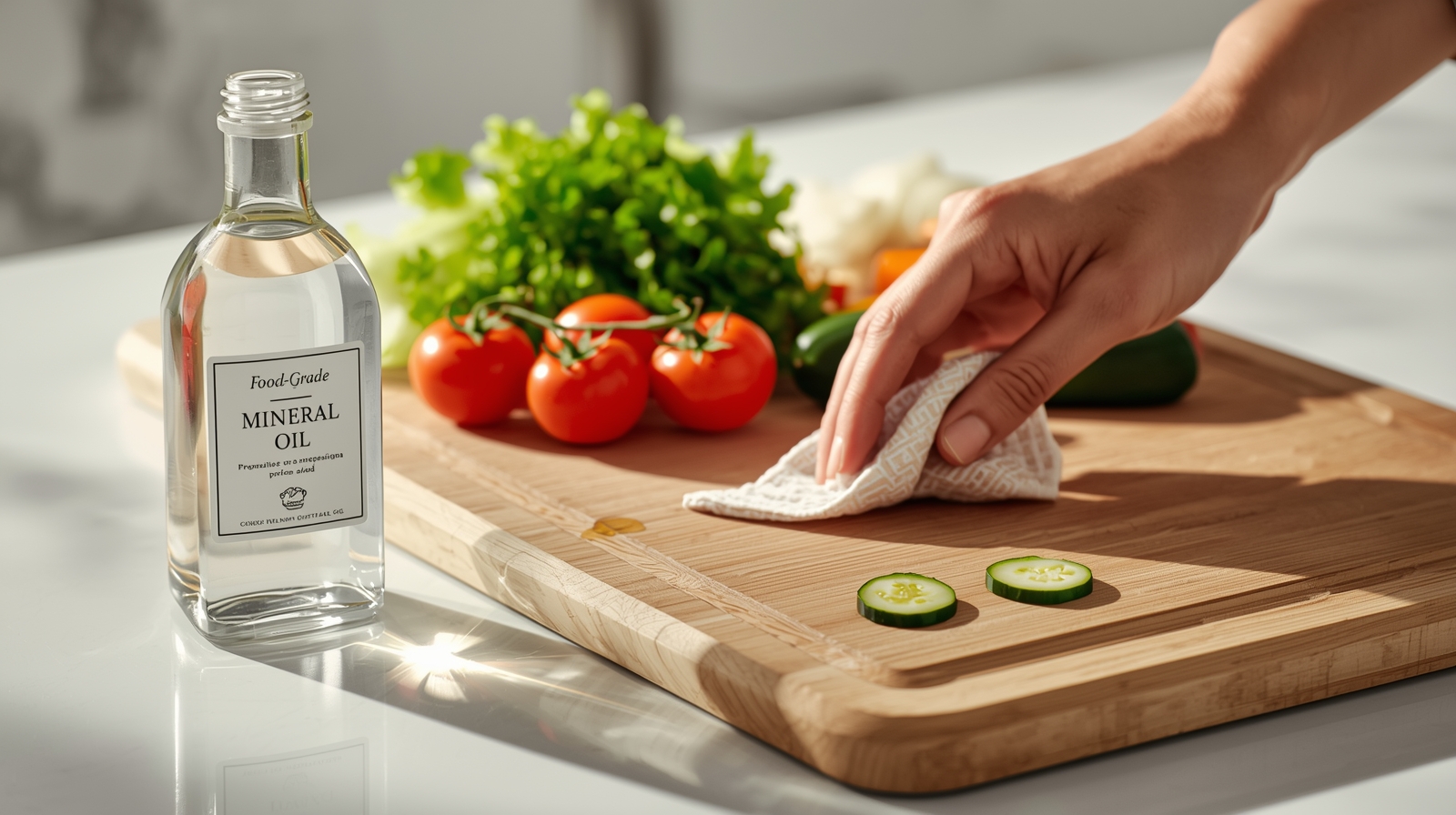
Step‑by‑Step Restoration
- Clean thoroughly
- Let dry completely
- Apply heavy coat of mineral oil
- Let soak overnight
- Repeat for several days if needed
Deep cracks may require sanding before oiling, but many boards regain life with oil alone.
Mineral Oil vs Other Cutting Board Oils
Mineral Oil
- Food safe
- Stable and long‑lasting
- Does not spoil
Walnut Oil
- Natural option
- Can go rancid
- Not safe for nut allergies
Linseed Oil
- Often not food safe
- Can harden over time
Mineral oil remains the safest and most reliable choice.
Signs Your Cutting Board Needs Oil
- Dull or faded appearance
- Rough texture
- Water absorbs quickly
- Visible cracks forming
Addressing these signs early prevents permanent damage.
Professional Maintenance Routine
Professionals follow a simple routine:
- Clean after each use
- Dry immediately
- Oil regularly
- Store upright when possible
This routine keeps boards kitchen‑ready at all times.
Frequently Asked Questions
Can I use mineral oil on utensils
Yes, wooden spoons, spatulas, and rolling pins benefit from mineral oil.
How long does mineral oil last on a board
Protection typically lasts several weeks depending on use.
Can I over‑oil a cutting board
Excess oil can feel greasy, but wiping removes it. The wood absorbs what it needs.
Final Thoughts
Using mineral oil for food cutting board care is a simple habit that delivers professional‑level results. It protects your investment, improves food safety, and keeps your kitchen tools looking and performing their best.
The method professionals never skip is easy: clean, dry, oil generously, and repeat regularly. With this routine, your cutting board can last for many years while remaining safe, smooth, and beautiful.